
Original Article
Analysis of the quality of service and performance of the SD-WAN network at Netspace
Análise da qualidade de serviço e desempenho da rede SD-WAN na empresa Netspace
Análisis de la calidad de servicio y rendimiento de la red SD-WAN en Netspace
Felizardo Miguel1 https://orcid.org/0009-0007-3713-8862
1Angola Cables Company. Luanda, Angola. felizardoromeu@yahoo.com.br
Received: September 26, 2024
Accepted: December 15, 2024
ABSTRACT
Wide area networks (WANs) are commonly used in organizations to maintain large-scale connectivity and facilitate fast and efficient communication. Over the years, due to the need to adapt to new technologies, SD-WAN networks have emerged, which are software-defined long-distance transport networks, responsible for dealing with the technological challenges imposed by the Internet of Things, cloud computing, reduction in the cost of Internet access services, the need for greater scalability, flexibility and management supported by Artificial Intelligence, among others, which is essential for the progress of telecommunications services. This article performed an evaluation of the quality of service and performance of an SD-WAN network, presenting results that demonstrated that software-defined wide area networks technology meets the requirements of the International Telecommunication Union, providing better network performance and greater reliability to maintain communication over long distances.
Keywords: Long distance networks, long distance communication.
RESUMO
As redes WANs são vulgarmente usadas em organizações para manter a conectividade em larga escala e facilitar uma comunicação rápida e eficiente. Ao longo dos anos, devido a necessidade em se adaptar às novas tecnologias, surgiram as redes SD-WAN que são redes por transporte em longas distâncias definidas por software, responsáveis por lidar com os desafios tecnológicos impostos pela internet das coisas, computação na nuvem, diminuição do custo dos serviços de acesso a Internet, necessidade de maior escalabilidade, flexibilidade e gestão suportada pela Inteligência artificial, entre outras, o que é fundamental para o progresso dos serviços de telecomunicações. Este artigo realizou uma avaliação da qualidade de serviço e desempenho de uma rede SD-WAN, apresentando resultados que demostraram que a tecnologia as redes alargadas definidas por software atende aos requisitos da União Internacional das Telecomunicações, proporcionando um melhor desempenho de rede e uma maior confiabilidade para manter a comunicação em longas distâncias
Palavras-chave: Redes de Longas distâncias, comunicação a longas distâncias.
RESUMEN
Las redes de área amplia (WAN) se utilizan comúnmente en las organizaciones para mantener la conectividad a gran escala y facilitar una comunicación rápida y eficiente. Con el paso de los años, debido a la necesidad de adaptación a las nuevas tecnologías, han surgido las redes SD-WAN, que son redes de transporte de larga distancia definidas por software, encargadas de hacer frente a los retos tecnológicos que impone el Internet de las Cosas, la computación en la nube, la reducción de costes de los servicios de acceso a Internet, la necesidad de mayor escalabilidad, flexibilidad y gestión apoyada en Inteligencia Artificial, entre otros, lo cual es fundamental para el progreso de los servicios de telecomunicaciones. En este artículo se realizó una evaluación de la calidad de servicio y desempeño de una red SD-WAN, presentando resultados que demostraron que la tecnología de red extendida definida por software cumple con los requisitos de la Unión Internacional de Telecomunicaciones, proporcionando un mejor desempeño de la red y mayor confiabilidad para mantener la comunicación a largas distancias.
Palabras clave: Redes de larga distancia, comunicación de larga distancia.
INTRODUCTION
According to Fey's definition (2018), WAN (Wide Area Network) are telecommunications networks that connect multiple access points located in multiple geographic areas with the aim of transporting data. Traditional WANs involve multiple technologies and protocols that have evolved over time and some are now in disuse, such as SDH/SONET, PPP, X25, Frame-relay, ATM networks, and current ones such as MPLS, DWDM, OTN and SD-WAN (study objective), among other technologies.
According to Rohyans, et al. (2019), SD-WAN network solutions in recent years have presented themselves as a solution to the current challenges regarding solutions based on cloud computing (Cloud) and Internet of Things (IoT). SDN (software-defined networking) takes a centralized approach to network management that abstracts the underlying network infrastructure from its applications, which represents numerous advantages over traditional WANs (particularly MPLS). Throughout this work, a comparative analysis of the performance of the two technologies will be made at Netspace.
Problematic situation
Every day new technologies emerge and with them, more challenges to be overcome. Companies and end users are rushing to use applications based on cloud computing, the Internet of Things (IoT), artificial intelligence (AI) to collect data and create knowledge in real time, the use of machine learning (ML), desktop virtualization and other technologies. Associated with this, the low cost of broadband Internet access (via cable, 5G) is making Internet services more affordable, which means that Internet traffic does not need to traverse the entire network to the central office and consume the already expensive bandwidth in MPLS.
With all these situations regarding long-distance communication, operators are forced to establish bandwidth aggregation through various means and different technologies. The problem of load balancing between connectivity circuits with bandwidth aggregation also arises, and automation appears as one of the alternatives. The problems mentioned above can be solved with more agile operations, which necessarily leads to the introduction of the programming and intelligence factor in order to look more deeply into the TCP/IP stack and respond effectively and in real time to network variations.
Specialized work and the growing need for greater bandwidth also increase operational and capacity costs and make connectivity solutions more expensive, which leads us to another problem related to cost reduction.
MATERIALS AND METHODS
This dissertation follows an applied research line. After defining the general and specific research objectives, a methodology was used that consists of using the empirical observation method to improve solutions for communications in wide area networks (WAN) and the variables that influence the quality of service and performance of software-defined wide area networks.
Further on, each of the factors that influence the quality of service and performance will be characterized with the mixed type of research (qual-quanti) where the advantages that SD-WAN has to increase bandwidth, fast delivery of content and cost reduction will be addressed and, in the end, ensure better operation and synchronization with cloud applications and other technologies.
The results obtained during the tests allowed us to verify the functioning and automatic balancing of traffic in scenarios where there are problems. Later on, it was also possible to verify several test scenarios that were in accordance with the standards defined by the ITU, as well as the reduction of costs by more than 50%. In this way, the execution of what is proposed for the preparation of this dissertation will be verified.
Literature review
SD-WAN technology is a current topic that has the characteristics of a software-defined network with strong evolution to face the challenges of emerging technologies, mainly applications based on cloud computing and other technologies. These existing applications and long-distance communication lead us to realize that traditional connectivity solutions have become obsolete for these new challenges.
Wide Area Networks (WANs): Wide area networks are defined as a connected collection of telecommunications networks distributed over a large geographic area spanning multiple cities, territories, or nations so that computer networks can exchange information (BasuMallick, 2022). Below is an illustrative image of the location of the WAN where businesses with many international branch offices use a WAN to connect office networks.
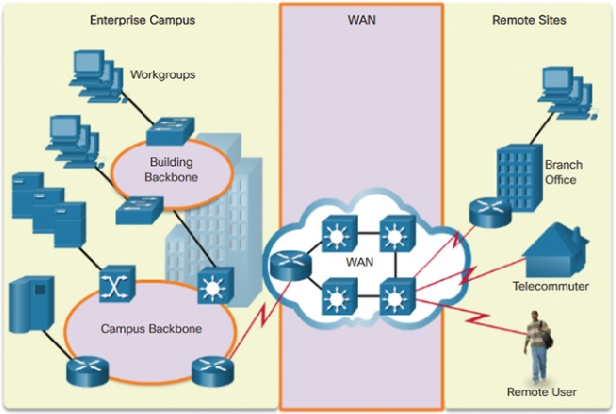
Fig. 1 -Location of a traditional WAN network.
Source: Cisco Press, 2018, p.4.
As previously mentioned, the technologies most commonly used to provide connectivity for communication networks over long distances are those presented below:
In this article, we will only briefly discuss MPLS as it is the most widely used WAN technology, offers us more resources and has more advantages over the others.
MPLS Networks: MPLS (MultiProtocol Label Switching) networks are the most widely used due to their simplicity and high-speed data transmission through labels. MPLS labels are advertised between devices participating in the data transport process so that they can build a map of the intended path and jump from label to label until they reach their destination. Label switching is performed from device to device until they reach their destination according to the pre-established map. Packets are forwarded by label switching instead of IP switching. The label switching technique is not new, as Frame-Relay and ATM also use labels to move packets/frames or cells within the network.
MPLS labels are used to route packets rather than the destination IP address and this has led to the popularity of MPLS (Ghein, 2007). An MPLS label is a fixed-length identifier with a 32-bit field with a certain structure. The Figure below shows the syntax of an MPLS label.

Fig. 2 -Structure of an MPLS network label.
Source: Ghein, 2007.
Names like Software as a Service (SaaS), Infrastructure as a Service (IaaS), Microsoft Azure, Amazon Web Services (AWS) and Google App, Microsoft Apps, Salesforce.com and other cloud-based business and productivity applications are not effectively addressed by traditional WAN designs that utilize Internet resources from one or more centralized data centers, and the time is fast approaching when we will no longer understand how we ever lived without cloud computing.
However, most network applications had low bandwidth requirements since they resided in centralized corporate data centers. Today, enterprises have very different requirements and are deeply involved in adopting the cloud, where virtually everything can now be offered as a service.
How can we reconcile the needs of today's cloud computing, the benefits of QoS, traffic engineering, and the dynamism required by modern networks, while at the same time increasing security, reducing costs, and having a technology that is relatively simple to use? The answer is SD-WAN.
We will now discuss several technologies to contextualize the basis of our objective, which is to build an SD-WAN network. The first to be highlighted is SDN, which, when combined with WAN networks, forms the SD-WAN network.
SDN: Over the years, developments have led us to the need to improve the performance of computer networks and one of the rationales for increasing efficiency was the adoption of SDN (Software Defined Networks). SDN emerges as a new architectural approach that optimizes and simplifies network operations by separating the control plane from the data plane and introducing the programmability factor through which it is possible to control the entire network from a single point. The SDN-based architecture is divided vertically into three layers.
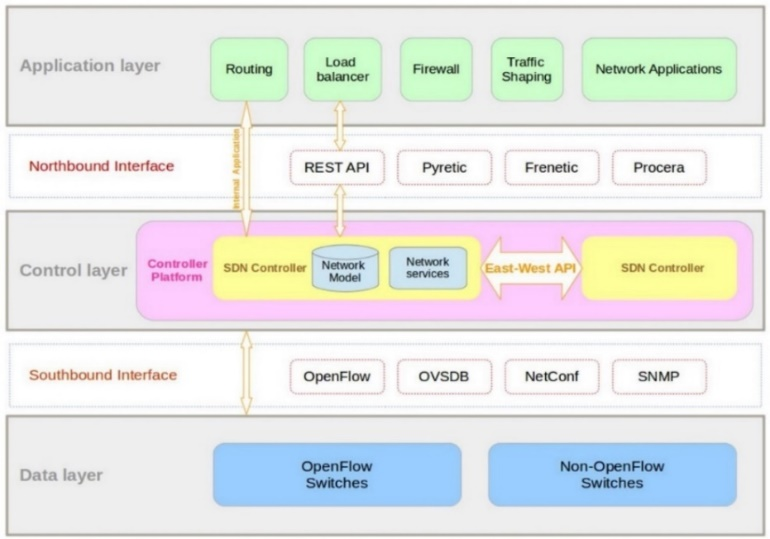
Fig. 3 -Three-tier distributed SDN architecture.
Source: Bannour et. al. 2020.
Cloud Computing: The definition of cloud computing is presented by the National Institute of Standards and Technology: Cloud computing is a model for enabling ubiquitous, convenient, and on-demand network access to a shared pool of configurable computing resources (e.g., networks, servers, storage, applications, and services) that can be rapidly provisioned with minimal management effort or interaction with the service provider. This cloud model consists of five essential characteristics, three service models, and four implementation models (Peter & Timothy, 2011).
Artificial Intelligence: The NITI Aayog (The National Strategy for Artificial Intelligence) defines Artificial Intelligence (AI) as the ability of machines to perform cognitive tasks such as thinking, perceiving, learning, problem-solving, and decision-making. Initially conceived as a technology that could mimic human intelligence, AI has evolved in ways that exceed its original conception. With incredible advancements made in data collection, processing, and computing power, intelligent systems can now be deployed to take on a variety of tasks, enable connectivity, and increase productivity (Roy, 2018).
Internet of Things: Cisco System (2020) defines the Internet of Things (IoT) as the network of physical objects, devices, vehicles, buildings, and other items embedded with sensors, software, and network connectivity that enables these objects to collect and exchange data. IoT arises from the need to make our daily lives, whether at work or entertainment, easier, more efficient, and safer.
Virtualization: It is a technique that enables the creation of IT services using resources traditionally associated with a given physical equipment. Virtualization in computing generally refers to the abstraction of some physical component into a logical object. By virtualizing an object, we can obtain a greater measure of utility from the resource that the object provides. For example, virtual LANs (local area networks) or VLANs provide greater network performance and better management by being separated from the hardware. Similarly, storage area networks (SANs) provide greater flexibility, better availability, and more efficient use of storage resources by abstracting physical devices into logical objects that can be manipulated quickly and easily (Portnoy, 2012).
Software-defined WAN (SD-WAN): Using cutting-edge technologies in combination with existing ones, a solution has been developed that can help with emerging technologies and address the aforementioned issues. It has emerged as a response to many organizations seeking to consolidate multiple network services at the same time, into a single, simplified and managed network infrastructure.
According to Gooley at al. (2020), SD-WAN is a software controller-based solution that uses SDN to implement, monitor, and manage wide-area networks (Gooley, Yanch, Schuemann, & Curran, 2020).
Presentation of Results
To analyze and present the results of the work carried out, some parameters and variables were selected that helped us understand the advantages and benefits of an SD-WAN network in relation to MPLS.
The analysis of the results was based on the comparison of the Quality of Service and performance of a traditional WAN network based on MPLS technology implemented by the company Netspace and the SD-WAN technology also implemented by the same company, focusing on the variables that we will describe throughout this article.
To demonstrate the results of the SD-WAN network implementation, we looked for a solution already in production at one of Netspace's clients, which operates in the oil and gas sector.
This is the company AngolSona and has connectivity services with its branches in Angola and abroad according to the connection diagram below, accompanied by other services.
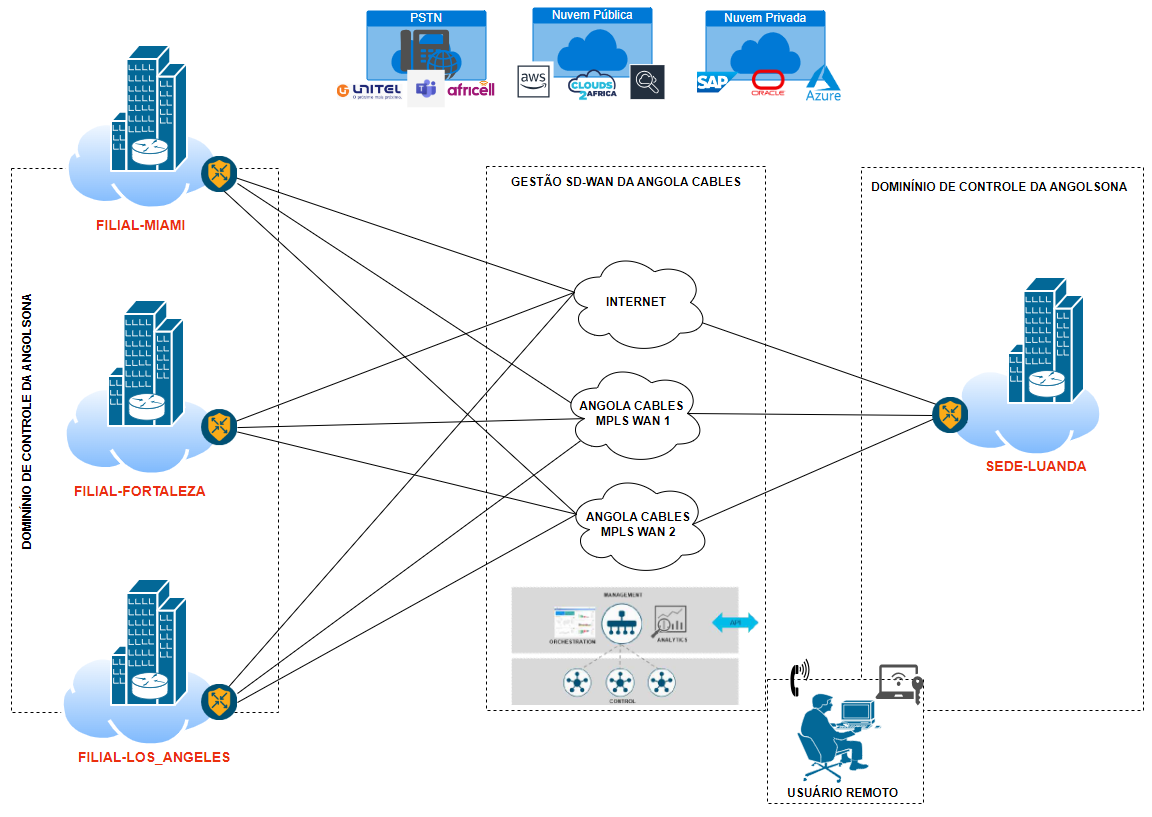
Fig.4 -Netspace global network diagram.
Source: Own authorship.
In this session we will analyze the dynamic selection of routes configured for the availability of connectivity services for the company AngolSona to analyze how quickly the service availability is recovered without any human intervention.
Network connectivity resilience testing
The first test used the "ping" tool to send an ICMP ECHO_REQUEST to obtain an ICMP ECHO_RESPONSE from an equipment or end device.
The test shown below in Figure 4, with positive results, demonstrates the resilience of the internet connectivity from the headquarters in Luanda to one of the most well-known destinations in the internet world (Google DNS). The test is normally used as a first step to detect and analyze problems in a network with internet connectivity.
The number one thousand (1000) was added to the end of the command line to send exactly the same number of round-trip ICMP packets for the analysis of various network quality parameters in production, such as latency, jitter and packet loss, which, by the way, the results were all satisfactory.
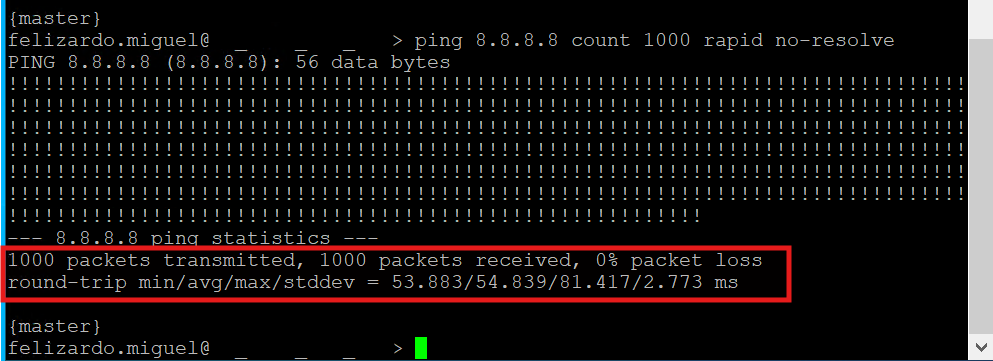
Fig. 5 -Flawless internet connectivity test scenario.
Source: Screenshot of Netspace SD-WAN appliance CLI.
Network failure test (failover).
The connectivity failure test used in this scenario for SD-WAN was performed intentionally and purposefully to analyze in case of network interruptions and to have knowledge about the downtime the network will observe and how long the network will take to reestablish itself with the redundant connection, transferring traffic from a degraded or failed connection to another connection.
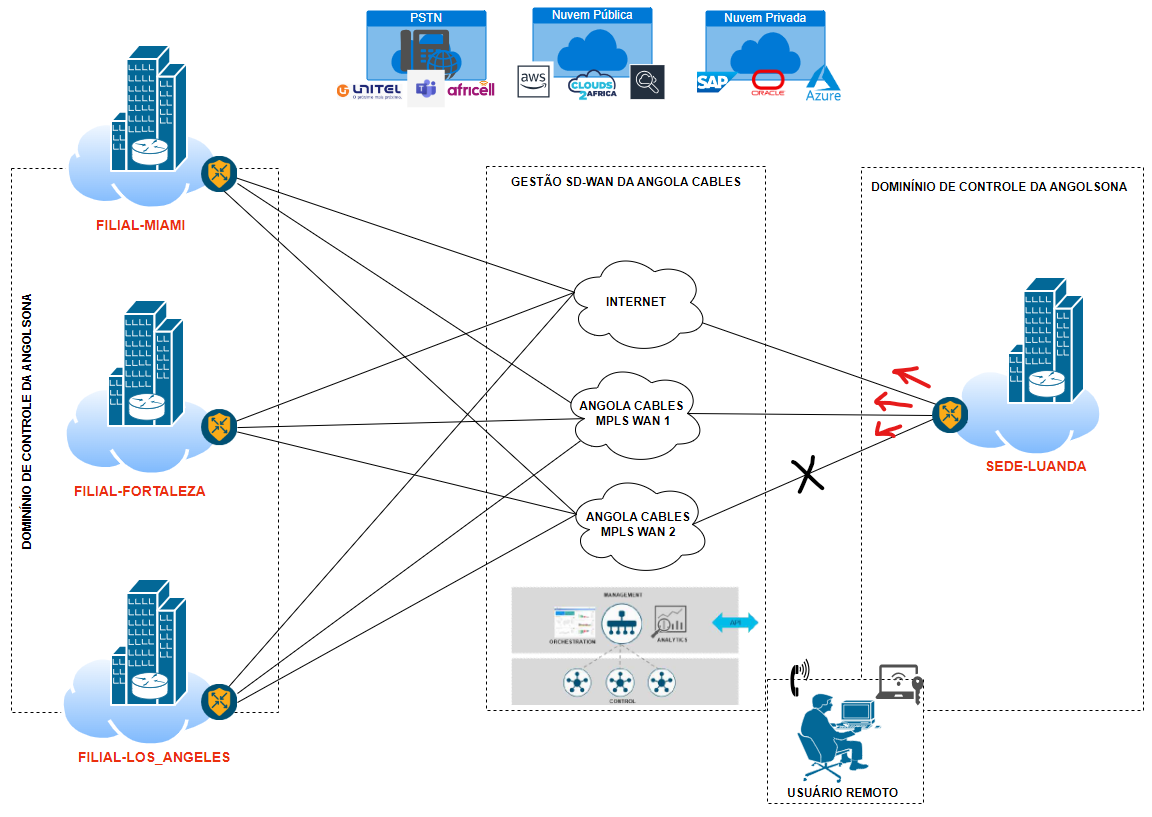
Fig. 6 -Overall diagram of the Netspace network analyzing the failure.
Source: Own authorship.
Through the results of the tests that originated at the Luanda headquarters and were destined to the public IP address of Google's DNS, it was possible to verify how quickly the connection is recovered as soon as the failure occurs and with this result we can conclude and verify the resilience of the SD-WAN technology in operation.
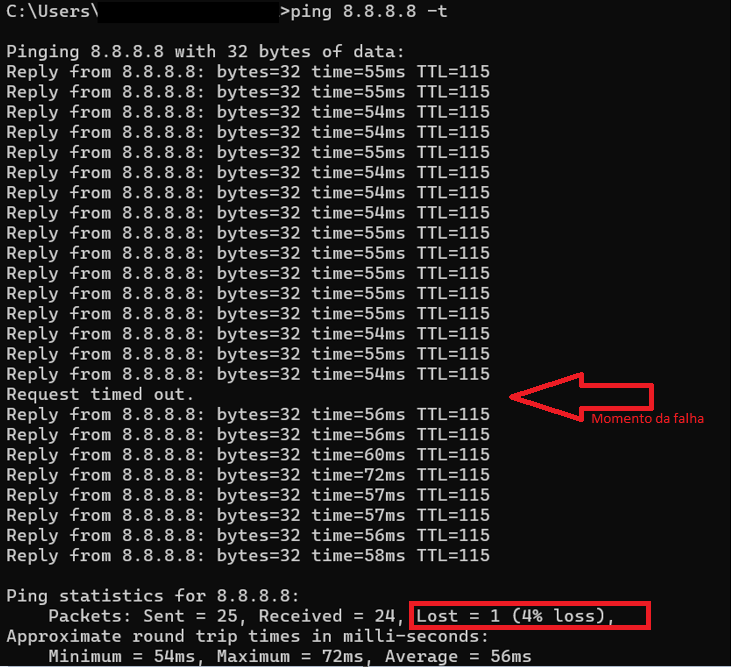
Fig. 7 -Internet connectivity service failure scenario.
Source: Screenshot of Netspace SD-WAN appliance CLI.
The test in Figure 6 once again used the Luanda headquarters as the origin and the Google DNS IP address as the destination to analyze the hops that the ICMP packet made during the failure period. Once again, positive results were presented in terms of the quality parameters that are being analyzed, since it was necessary to wait approximately 12 ms before the secondary connectivity became operational, which guarantees an availability period of almost 100% (99.999% at the service SLA level).
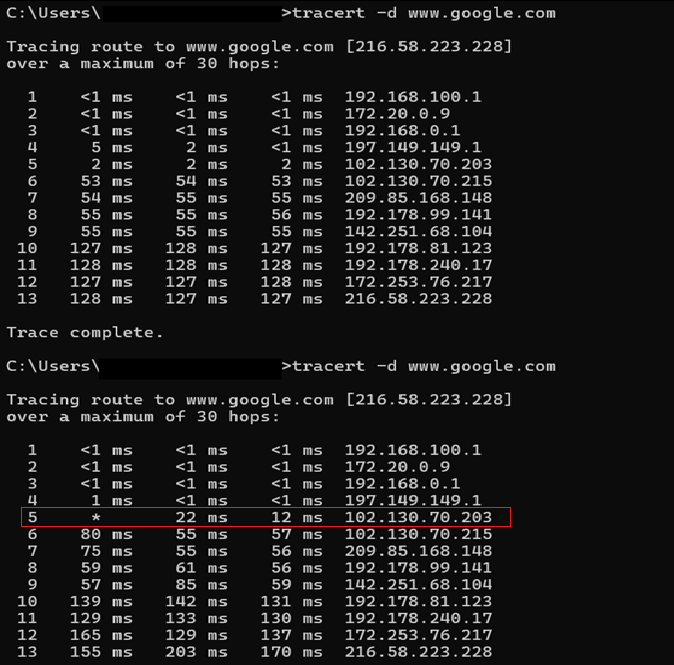
Fig. 8 -Internet connectivity service failure scenario.
Source: Screenshot of Netspace SD-WAN appliance CLI.
Load Balancing Test
The connectivity failure was also analyzed in terms of bandwidth availability on the CPE MX480 terminal equipment. The CPE MX480 terminal equipment allows the use of three connections, one main, one redundant and one for the Internet connection. Figure 8 clearly shows the bandwidth usage on the main MPLS WAN 1 connection and the redundant MPLS WAN 2 respectively.
The MPLS WAN 1 and MPLS WAN 2 connections have always been used in traffic balancing mode, facilitating the reduction of response time. When the intentional failure occurred when the MPLS WAN 1 connection was disconnected, the traffic was quickly migrated to the MPLS WAN 2 connection due to the load balancing between the connections.

Fig. 9 -Internet traffic analysis at the headquarters location in Luanda.
Source: Screenshot from Netspace's traffic monitoring system.
This migration speed was possible because both SD-WAN VPN tunnels via the OMP protocol were already established, thanks to the SD-WAN configuration in Active/Active traffic aggregation mode, and therefore it was not necessary to wait for new VPN tunnels to be created.
Performance analysis for specific applications
As one of the main objectives of SD-WAN is to increase the performance of service connectivity, for this dissertation we will also analyze the performance of applications used on a daily basis at the company AngolSona and to present the performance results for certain applications we use the recommended ITU-T standard with reference to recommendation G.1010 - (11/01).
The ITU-T e-Recommendation defines a model for multimedia quality of service (QoS) categories from the end-user perspective. By considering user expectations for a range of multimedia applications, eight distinct categories are identified, based on tolerance to information loss and delay (ITU-T, 2001). A comparative analysis of the values of the variables in the table below will be made for audio and data transmission respectively:
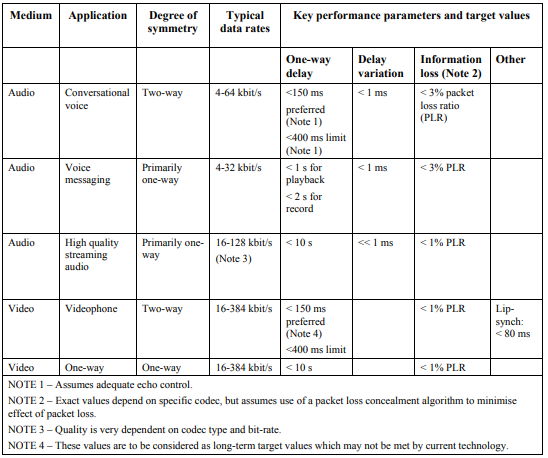
Fig. 10 -ITU-T G.1010 performance targets for voice and video.
Source: ITU (G.1010 11/2001).
It is important to note that in the tests above, a change was observed in the test results related to the data transmission rate with a result of 43,000 kbit/s. Since this is streaming video transmission, sufficient bandwidth is required that adapts to live video transmission to ensure good quality of service. And SD-WAN has a technique that allows the amount of bandwidth in the network to be automatically adjusted according to the required capacity according to the test results presented.
Cost reduction with SD-WAN
One of the most important advantages of implementing SD-WAN is network resilience, high quality connectivity services and adaptation to current technological trends, as we have mentioned several times throughout this dissertation. Furthermore, there is the cost situation related to implementing an SD-WAN network or the quantifiable return on investment (ROI) analysis. According to the research carried out and demonstrated in figure 13 below, an example of a return on investment (ROI) calculation in a generic way can be seen, and we can observe the surprising details of a cost saving of 64% when moving from a dual MPLS connection project to an Internet connection project with two connectivities and SD-WAN management.

Fig. 11 -Simple ROI calculation example.
Source: Gooley, 2020.
These numbers were taken from a real-world customer example. However, each company will have different ROI calculations based on the cost of circuits, type of circuits, and location.
Table I- Internet costs (DIA) and managed with SD-WAN.
SD-WAN/DAY |
Active |
Active |
MRC based on 3 year contract |
|||
Location |
Primary DAY |
Bandwidth |
Secondary Broadband |
Bandwidth |
SD-WAN Management |
Total |
Headquarters — Luanda |
950,000 kz |
1000Mbps |
570,000 kz |
500Mbps |
300,000 kz |
1,820,000 kz |
Branch — Singapore |
570,000 kz |
500Mbps |
342,000 kz |
250Mbps |
150,000 kz |
1,062,000 kz |
Branch — Fortaleza |
570,000 kz |
500Mbps |
342,000 kz |
250Mbps |
150,000 kz |
1,062,000 kz |
Branch — Miami |
570,000 kz |
500Mbps |
342,000 kz |
250Mbps |
150,000 kz |
1,062,000 kz |
Total |
2,660,000 kz |
1,596,000 kz |
750,000 kz |
|||
Grand total |
5,006,000 kz |
Cost Reduction compared to two MPLS connections |
5,744,000 kz |
Cost Reduction compared to MPLS/L3 |
2,690,000 kz |
|
Source: Own authorship.
Table I above was presented to analyze the results in terms of costs for the purchase of two broadband connections with the capabilities represented in the table and with SD-WAN Management.
The two SD-WAN-managed internet connections will operate at point-to-point connectivity level through redundant SD-WAN tunnels between the Luada headquarters and its branches. The cost associated with the proposed model recorded a recurring monthly value of approximately five million kwanzas (5,000,000 Kz). This represents a reduction of five million, seven hundred and forty-four thousand kwanzas (5,744,000 Kz) in relation to the costs in table VIII, and of two million, six hundred and ninety thousand kwanzas (2,690,000 Kz) in relation to table IX, presented as a very significant reduction in relation to the first solutions presented.
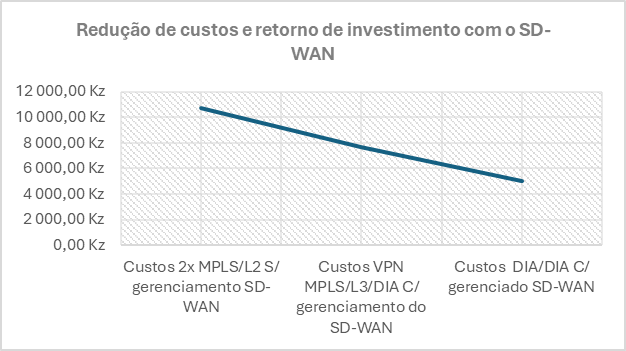
Fig. 12 -64% reduction compared to traditional WAN.
Source: Own authorship.
As we can demonstrate in the graph above, we reached almost 60% cost reduction and with this we reached the conclusion that the return on investment of implementing SD-WAN is also compensatory in terms of monetary costs, as per the three examples of recurring costs in the tables above.
CONCLUSION
It has been proven that software-defined wide area networks (SD-WAN) are revolutionizing the way in which companies and information technology services transmit data efficiently. This dissertation presented the main characteristics of SD-WAN technology, its architecture and the benefits of implementing SD-WAN as an adequate solution to the challenges that cloud computing has brought.
In summary, we can conclude that in recent times there have been changes in the way long-distance networks communicate. With the virtualization of network services and the adoption of SDN, it is possible to build a software-defined WAN network that makes better use of bandwidth, offers better operational capacity, security and management, and minimizes costs compared to MPLS technology.
Based on this study, it was found that, by implementing and adopting the SD-WAN network, satisfactory results were achieved in terms of cost reduction of more than 60%, compliance with the ITU-T reference standard in recommendation G.1010 (11/01)
REFERENCES
Arham, A., Utomo, P., & Winarno. (30 de Maio de 2023). Implementation of Software Define-Wide Area Network (SD-WAN) to Improve Efficiency on KGX Logistic Company. Implementation of Software Define-Wide Area Network (SD-WAN) to Improve Efficiency on KGX Logistic Company.
BasuMallick, C. (1 de julho de 2022). SpiceWorks. Fonte: What Is a Wide Area Network (WAN)? Definition, Types, Architecture, and Best Practices: https://www.spiceworks.com/tech/networking/articles/what-is-wide-area-network/
Fey, A. F. (2018). Introdução Às Redes Wan: Redes De Computadores De Longa Distância (365 ed.). Caxias do Sul: Clube de Autores. Acesso em Novembro de 2023
Ghein, L. d. (2007). MPLS Fundamentals. Indianapolis: Cisco Press.
Gooley, J., Yanch, D., Schuemann, D., & Curran, J. (2020). Cisco Software-Defined Wide Area Networks: Designing, Deploying and Securing Your Next Generation WAN with Cisco SD-WAN. Hoboken: Cisco Press.
ITU-T. (Setembro de 2008). Definitions of terms related to quality of service. Quality of telecommunication services: concepts, models, objectives and dependability planning Terms and definitions related to the quality of telecommunication Services, pp. 1-4.
Ivanov, I. I. (2023). SD-WAN: Example-based Study Guide: Volume 1 . California: Colored Edition.
Jason, G., Dana, Y., Dustin, S., & John Curran. (2020). Cisco Software-Defined Wide Area Networks: Designing, Deploying and Securing Your Next Generation WAN with Cisco SD-WAN. California: Ciscopress.
Parker, P. M. (2020). The 2021-2026 World Outlook for Software-Defined Wide Area Network (SD-WAN) Appliances. Singapore: ICON Group International, Inc.
Declaration of conflicts of interest:
The author of the article declares that there is no conflict of interest that affects the publication of the article.
Authorship Contribution:
The author also contributed to the conception, design and bibliographic research, which enabled the development and review of the content for final approval of the version to be published.

This work is under a Creative Commons Attribution-NonCommercial 4.0 International License